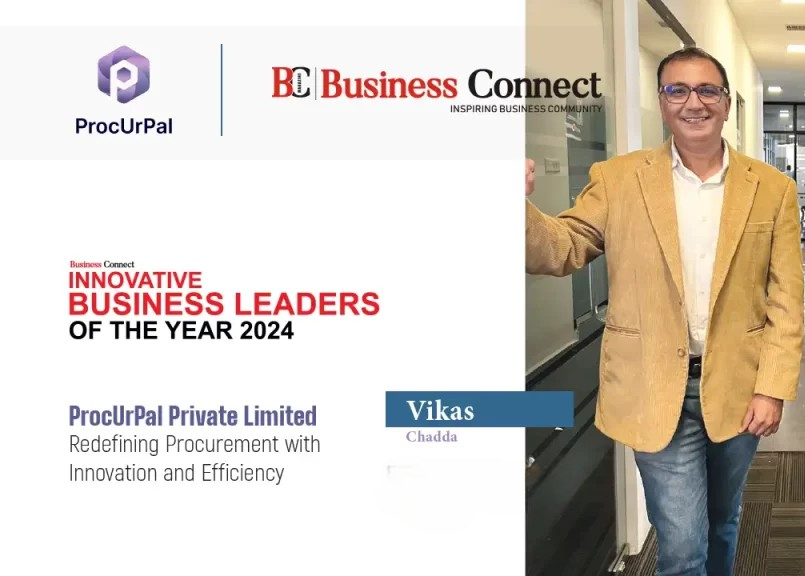
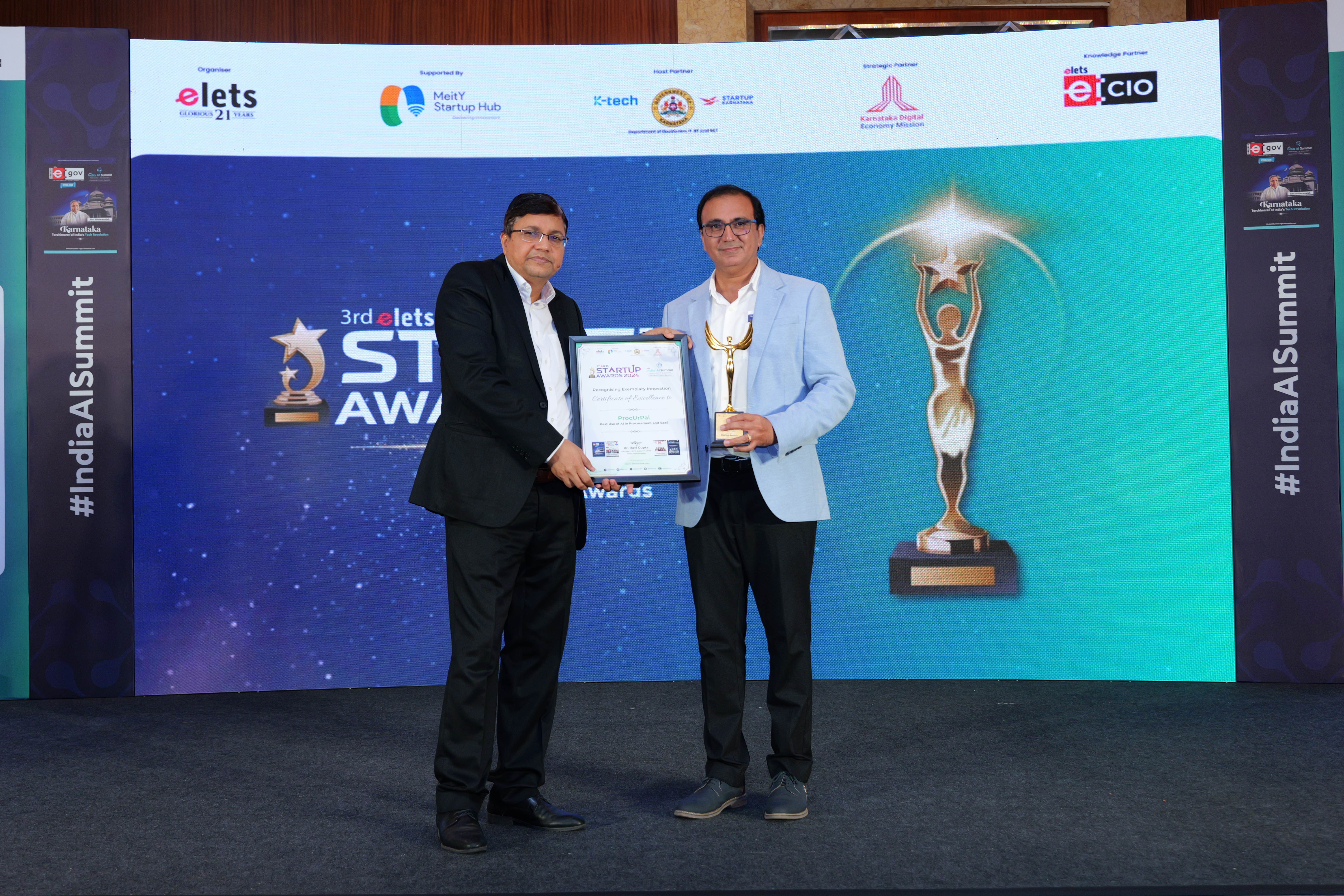
In today’s fast-paced business environment, the procurement landscape is undergoing a significant transformation. Companies are increasingly turning to technology driven solutions to streamline processes, enhance efficiency, and drive strategic value. ProcUrPal Private Limited stands at the forefront of this evolution, offering cutting-edge procurement solutions that redefine efficiency and drive transformative change. Founded by industry veterans Vikas Chadda and Subramanya Nagaraj ProcUrPal is on a mission to revolutionize procurement processes worldwide through innovative AI-powered solutions and a customer-centric approach. The Artificial Intelligence built into the product assists the users in supplier discovery, collation of RFP responses from suppliers side by side and scoring and evaluation of suppliers. ProcUrPal offers two powerful modules to streamline your procurement process. With our RFx Module, effortlessly conduct RFIs, RFPs, RFQs, Reverse, and Forward Auctions. Our platform’s customizable features and automated workflows simplify sourcing, enabling informed decisions and significant cost savings. Additionally, our eAuction Module empowers real-time negotiation with cutting-edge tools like Reverse and Forward Auctions. Automated alerts, bid comparison, and supplier response gathering ensure maximum value from every event. Elevate your procurement performance with ProcUrPal today. Business Portfolio and Mission ProcUrPal’s business portfolio revolves around revolutionizing procurement processes through AI-powered technology solutions. From procurement software to procurement services as a consolidated supplier, ProcUrPal aims to streamline operations and drive efficiency for its clients. The company’s mission is clear: to revolutionize procurement worldwide with innovative, AI-powered solutions that streamline processes, optimize supplier relationships, and drive tangible value. The platform is structured into distinct modules, including RFP and eAuction Modules, designed to enhance sourcing processes. Phase 1 of our product development is Source to Contract (S2C), focuses on these modules, enabling seamless request for proposal processes and advanced eAuctions. Phase 2, Procure to Pay (P2P), further enhances the platform’s capabilities, facilitating end-to-end procurement processes for maximum efficiency and effectiveness. Leadership Inspiration The journey of ProcUrPal’s founders, Vikas Chadda and Subramanya Nagraj, into entrepreneurship and business leadership is rooted in a wealth of experience and a deep understanding of the procurement and IT infrastructure/SaaS domain. With over 55 years of combined experience, including stints at renowned companies like Lenovo, Xerox, Adobe, and Wipro, Vikas and Subramanya bring a unique blend of expertise and vision to ProcUrPal. Their inspiration to become business leaders stemmed from a desire to drive change, create value, and bring innovation to the procurement SaaS industry. Key Innovations and Differentiators What sets ProcUrPal apart as an innovator in its field is its relentless pursuit of technological advancements and commitment to pushing the boundaries of traditional procurement practices. The company’s innovative approach is characterized by cutting-edge AI technology, data analytics, and a user-friendly interface that redefines efficiency, real-time collaboration, data-driven decision-making, supplier relationship management, compliance assurance, scalability, and flexibility. In an era where procurement is not just about cost containment but strategic value creation, ProcUrPal stands as a pivotal tool that redefines how businesses approach procurement in the digital age. Integration of Emerging Technologies Over their years of experience, Vikas and Subramanya have witnessed the transformative impact of emerging technologies like blockchain, AI, and cybersecurity in revolutionizing the procurement industry. ProcUrPal leverages these technologies to enhance transparency, security, and efficiency in procurement processes. Through AI-driven features, ProcUrPal simplifies data analytics, guides sourcing processes, and empowers procurement professionals to make informed decisions based on AI recommendations, ultimately driving greater value for clients. Prioritizing User Experience and Satisfaction At the core of ProcUrPal’s business processes is a commitment to prioritizing user experience and customer satisfaction. The company achieves this by understanding customer needs, delivering innovative solutions, and providing exceptional support at every touchpoint. By eliminating time-consuming manual tasks, reducing errors, and offering comprehensive analytics and actionable insights, ProcUrPal empowers procurement teams to focus on strategic initiatives, drive cost savings, and enhance supplier relationships. Additionally, ProcUrPal offers seamless integration with Request for Proposal (RFP) processes, streamlining vendor selection, and enhancing transparency. Moreover, the platform incorporates cutting-edge eAuction capabilities, including forward and reverse auctions, allowing users to conduct efficient and transparent electronic auctions, optimizing procurement processes further. Rigorous Quality Control Measures Ensuring high-quality solutions and services is paramount at ProcUrPal. The company implements rigorous quality control measures, including comprehensive testing and adherence to industry standards, to deliver exceptional procurement solutions and uphold its commitment to excellence. Definition of Leadership Leadership at ProcUrPal is defined by vision, integrity, empowerment, and accountability. The leadership panel believes in inspiring the team, fostering a culture of innovation, and leading by example with integrity and transparency. This approach contributes to a culture of collaboration, trust, and respect within the organization. Cultural Principles ProcUrPal’s cultural principles revolve around collaboration, trust, diversity celebration, and empowerment. The company strives to create a supportive working environment where ideas are valued, individuals thrive, and innovation flourishes. Strategic Partnerships and Market Expansion ProcUrPal’s strategy for growth extends beyond technological innovation to encompass strategic partnerships and market expansion. The company is actively forging alliances with Value Added Distributors, Major IT OEMs, and System Integrators to enhance its reach and offer comprehensive procurement solutions to a wider client base. These partnerships not only expand ProcUrPal’s market presence but also bring synergies that drive innovation and create added value for clients. By collaborating with industry leaders and leveraging their expertise, ProcUrPal aims to stay at the forefront of procurement innovation and deliver unparalleled value to its customers. Sustainable Impact and Corporate Responsibility In addition to its focus on technological innovation and business growth, ProcUrPal is committed to making a sustainable impact and fulfilling its corporate responsibility. The company believes in using its talent, resources, and technology to create meaningful change in communities and contribute to environmental sustainability. Through initiatives focused on diversity, equal opportunity, family-friendly policies, and environmental stewardship, ProcUrPal aims to not only drive business success but also create a positive socio-economic impact. By aligning its business practices with values of inclusivity, environmental responsibility, and community support, ProcUrPal sets a standard for responsible corporate citizenship in the procurement industry. Noteworthy Achievements In a relatively short span of its inception, ProcUrPal has achieved